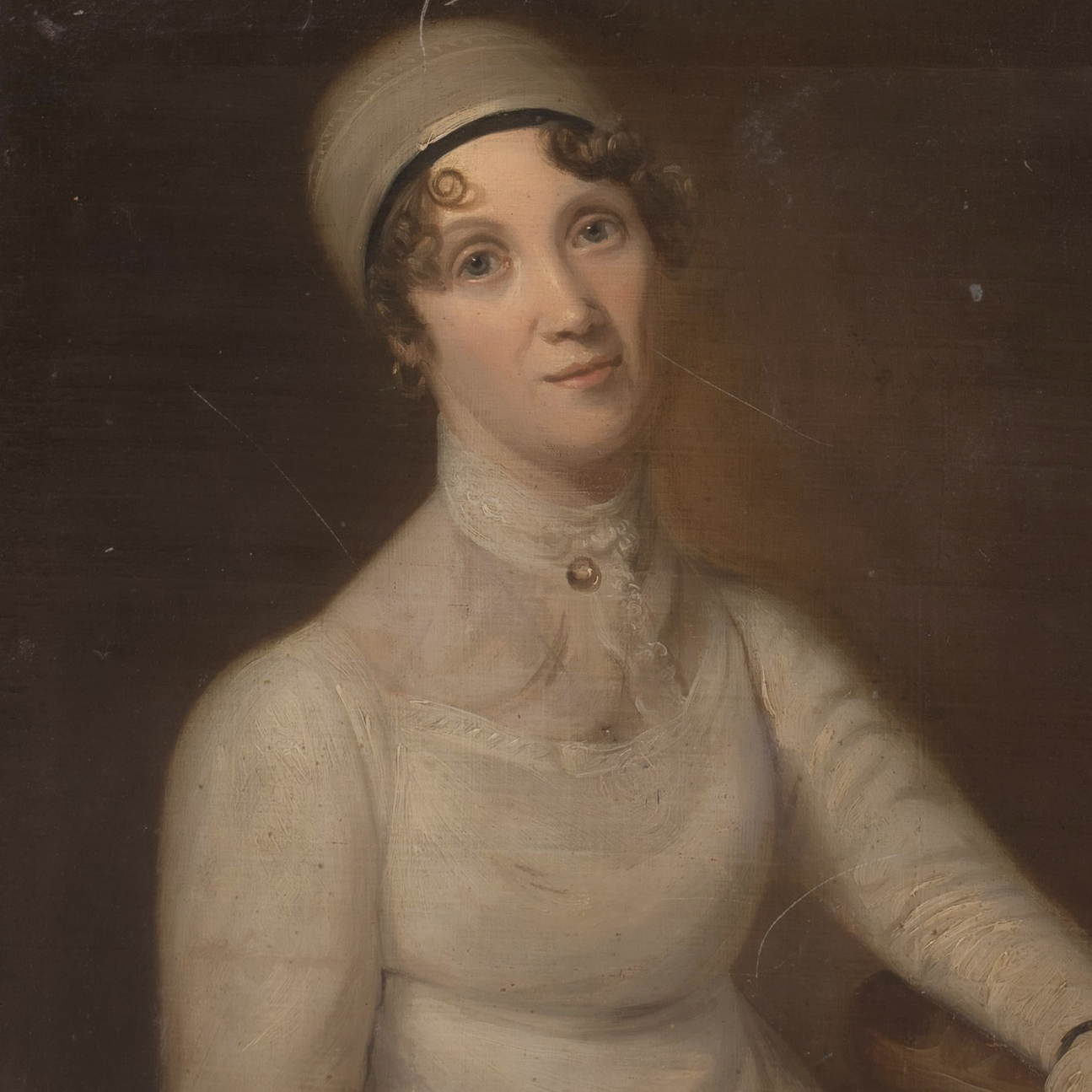
Anna Maria Porter — English historical novelist and sister of Jane Porter.
Anna Maria Porter was born at Durham in 1778, the youngest child of William Porter, an army surgeon, and Jane Blenkinsop. Her father died when she was still an infant, leaving the family clever, genteel, connected—and poor. Her mother carried the children first to Edinburgh, where the girls were educated, and then into the literary world they would never entirely escape.
The Porters were a family of talent. Jane became famous for Thaddeus of Warsaw and The Scottish Chiefs. Robert Ker Porter was a painter, traveller and diplomat. There were two other brothers, but Maria (as she was known) was the hardest working of the bunch. She was never quite as famous as Jane, but definitely more prolific. She published early, wrote constantly, and became one of the most successful novelists of her generation.
Her great subject was history made emotional. In The Hungarian Brothers and other romances, she wrote of war, exile, loyalty, ruined houses, noble suffering and dangerous feeling. The Porter sisters helped create the historical novel before Walter Scott made the form his own, but unlike Scott, they had to do it as unmarried women living by their pens.
In 1809, Maria Porter came to stay with the Margravine of Anspach. There she met Keppel Craven and, as his mother claimed that all women did, she fell in love with him. Her novel, Don Sebastian, was heavily influenced by those feelings. She also grew attached to Craven’s son, Augustus, prompting one of her later characters to be based upon him: Theodore in The Recluse of Norway. However, despite all her plans, Keppel Craven didn’t propose to her. He loved Mary Carter—a woman Porter doubtless glimpsed in the margravine’s household, but probably didn’t understand was Craven’s true love.
Porter never got over Craven. For the rest of her life, she regretted him, but nevertheless continued to stay in contact with his son. She died at Bristol in 1832, just fifty-three years old. Upon learning of the passing, Craven wrote “news of Maria’s death” in his journal. He was usually careful, almost formal, in how he referred to women; she appears elsewhere always as “Miss Porter.” The lapse into her Christian name reads less like accident than admission—either a flash of real feeling breaking through Craven’s typical formality, or, just as possibly, one more name folded quietly into the same disguise he used for everyone he'd rather the world not properly see.