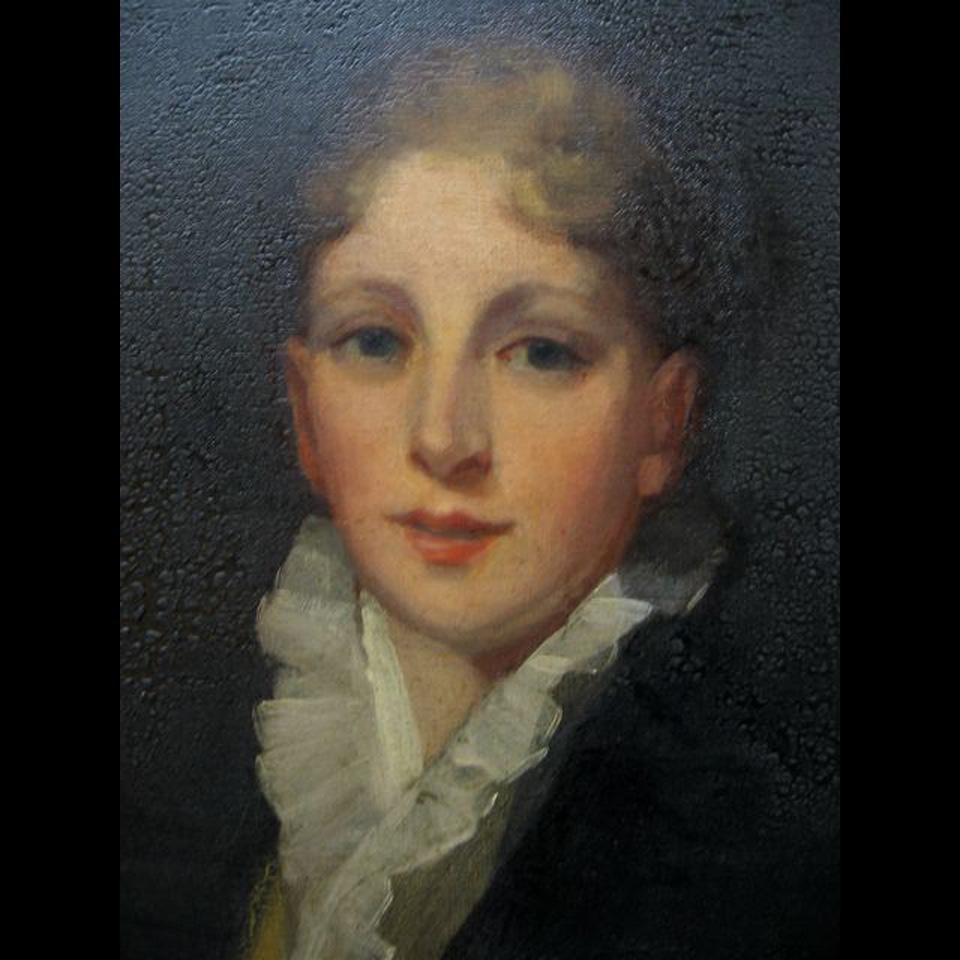
Augustus Craven — Diplomat, husband, son of Keppel Craven.
Augustus was born in 1806, coming into the world in secrecy. He was baptised Augustus Derville. Next he was known as Augustus Denham—a fiction, for he’d not been fathered by any such man. Eventually, he’d become the son of Richard Keppel Craven: attaché, husband of Pauline de la Ferronnays, and one of those minor diplomatic men who appear in biographies chiefly because they married remarkable women. Privately, he was something more difficult. He was the child Keppel Craven didn’t at first know he had, raised under cover by his half-sister, a Frenchwoman, Victorine Derville.
His mother’s identity was the more dangerous part of the story. Augustus was born where he could not remain, and so he was placed with Derville, whose reputation made concealment easy. A courtesan could be assumed to have children. No questions would be asked. As Sir William Gell once told the novelist Maria Porter, Augustus might be “anybody’s child.” That was the genius of the arrangement: he was hidden not by respectability, but by scandal…and yet he was with family.
Keppel’s first recorded interaction with the infant was not fatherly. When finally he visited Derville five days after the birth, he noted in his journal, “The child very fine.” Then Keppel went off to Benham for the remainder of the spring. This unfeeling response was unlike him. It suggests Derville protected Keppel, lest the child die—as children often did—and the loss destroy the sensitive father.
In 1809, everything changed. Augustus emerged from the fog of uncertainty and became Keppel’s “godson” to everyone, even the Princess of Wales, who adored him. The boy remained surrounded by evasions, but Keppel’s conduct altered. He acted the “godfather” or, to his closest friends who knew the truth, as father, and demonstrated an inordinate tenderness for the child. He even acknowledged his son as soon as circumstances allowed.
This did not make Augustus’s position any simpler. Whereas before he’d been an orphan whom Keppel had taken in, now Augustus was a bastard. His life would be spent negotiating that space between acknowledgment and scandal, trying to find his place in the world.
After studying at the Lycée Louis-le-Grand at Paris, Augustus followed his father to Naples. There he became attached to the British legation. He had birth enough, training enough and charm enough for diplomacy. In Italy he was successful, and along with Mary Carter and Sir William Gell, around them moved aristocratic refugees, Catholic families and English visitors.
Among these was Pauline de la Ferronnays. He married her in 1834.
The match was childless, but not empty. Augustus and Pauline lived through money troubles, illness, and a long series of la Ferronnays family tragedies, but they also put on plays. Pauline wrote books. Augustus tried and failed at a political career, for in 1852 he stood unsuccessfully for Parliament in Dublin. It came to nothing.
Augustus died near Lausanne in 1884. Pauline carried him back to Boury, and buried him with her brother and sisters. He’d begun life hidden from respectable society. He’d ended it famous as the husband of one of Catholicism’s most pious women, laid to rest with those who’d claimed him, not by blood, but by love—a family of saints.
A more satisfying ending could hardly be imagined.