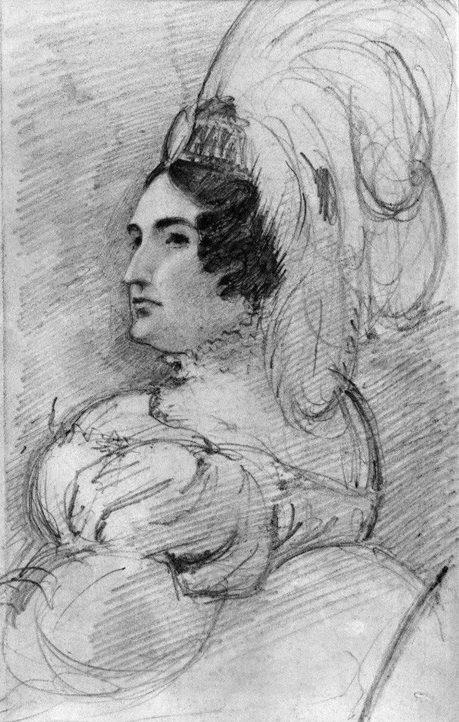
Caroline of Brunswick — Princess of Wales and later Queen Caroline, estranged wife of George IV.
Caroline Amelia Elizabeth of Brunswick was born on May 17, 1768, at Brunswick, the daughter of Charles William Ferdinand, Duke of Brunswick, and Princess Augusta of Great Britain, George III’s sister. In her youth, she was severely neglected. Therefore her manners were famously lacking, for she’d grown up completely undisciplined, without guidance or even proper education. Notwithstanding, Caroline was clever and affectionate. She soon entered a marriage arranged for her…but with a man who detested her nearly on sight.
George, Prince of Wales—already privately attached to Mrs. Fitzherbert and drowning in debt—married Caroline in 1795. He’d been bribed to do so. With the marriage, Parliament would pay his bills, while England’s succession would be ensured with an heir.
The match was a disaster. Although Caroline gave birth to their only child, Princess Charlotte, the husband and wife barely accomplished this feat. The royal pair separated. For years Caroline existed in a strange half-state: Princess of Wales, mother of the heir presumptive, yet excluded, and mocked. The “Delicate Investigation” of 1806 failed to prove that Caroline had been unfaithful, but the charges still damaged her position. Her access to her daughter was restricted. Caroline’s life was never the same.
By 1814, she’d had enough of England. She left for the Continent, taking Keppel Craven, Mary Carter and Sir William Gell with her. In Italy she hired a courier, Bartolomeo Bergami, who almost certainly became her lover. This was her undoing. To the Prince Regent and his ministers, the courier became the instrument by which they hoped to destroy her.
For Craven and Gell, Caroline was not simply a scandalous princess in the newspapers. She was employer and patroness. She was a real and true friend. Her household gave them rank. It brought them to Brunswick and eventually to Naples. Caroline’s court was chaotic, indiscreet, and yet oddly protective: the sort of place where unconventional arrangements could hide in plain sight because everyone else was already compromised.
When George III died in 1820, Caroline became Queen Consort in name, although George IV was determined she should never really be queen. She returned to England to claim her rights and was received by crowds as an injured wife, almost a folk heroine. The attempt to strip her of her title through the Pains and Penalties Bill became a public trial of both spouses, and the King lost as much dignity as Her Majesty did.
Turned away from the coronation of her husband, banned from the very ceremony that should have crowned her, Caroline died weeks later—accused, humiliated, her heart broken. For Craven and Gell, her death was the end of a chapter in their lives. They’d come to her court as opportunistic companions. They left it as a family, among the truest friends Caroline ever had.