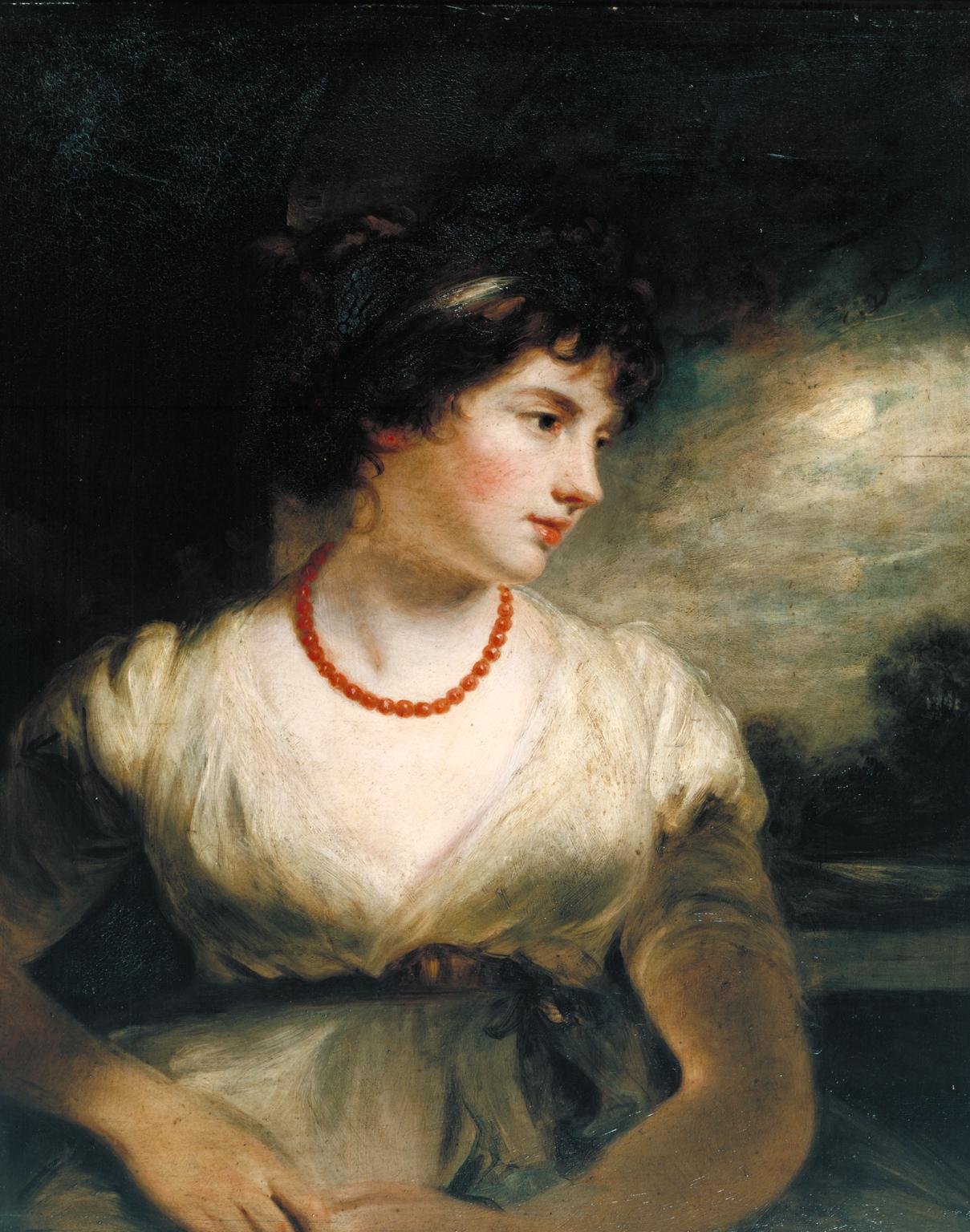
Jane Harley, Countess of Oxford — English aristocrat and political hostess.
Jane Elizabeth Scott was born in 1774, the daughter of the Reverend James Scott, vicar of Itchen Stoke in Hampshire. Clever, beautiful, political and never much inclined to obedience, she married Edward Harley, 5th Earl of Oxford and Earl Mortimer, in 1794. The marriage endured, but only because Lord Oxford was extraordinarily patient with his wayward wife.
Lady Oxford belonged to the radical, reform-minded side of fashionable society. She was connected with Francis Burdett, admired French Revolutionary ideas, and became a friend of the Princess of Wales. However, Lady Oxford’s male paramours were numerous enough, and public enough, that the Regency ton, hardly innocent itself, considered her beyond the pale. Her children were famously called the “Harleian Miscellany,” because no one was quite certain which father belonged to which child.
Her most famous lover was Lord Byron, who came to her after his disastrous affair with Lady Caroline Lamb. Byron was drawn to Oxford’s beauty, wit, politics and sexual freedom; she, like so many others, expected more permanence from him than he was willing to give. The affair ended, but her notoriety did not.
She died in 1824. She had been a countess, a reform hostess, a scandal, a beauty and a mother many times over. The paternity of her children was a running joke across two decades of London gossip; yet to Keppel Craven, she was something else again, a chapter he never plainly wrote down. What passed between them left no trace in his journal but some initials scribbled in June of 1805, and then her name, cloaked in doodles and code, again in 1811. There was little mention of Lady Oxford in his letters, but what mention there was read as entirely blasé—except that, afterward, nothing between Keppel and Mary was ever quite the same.