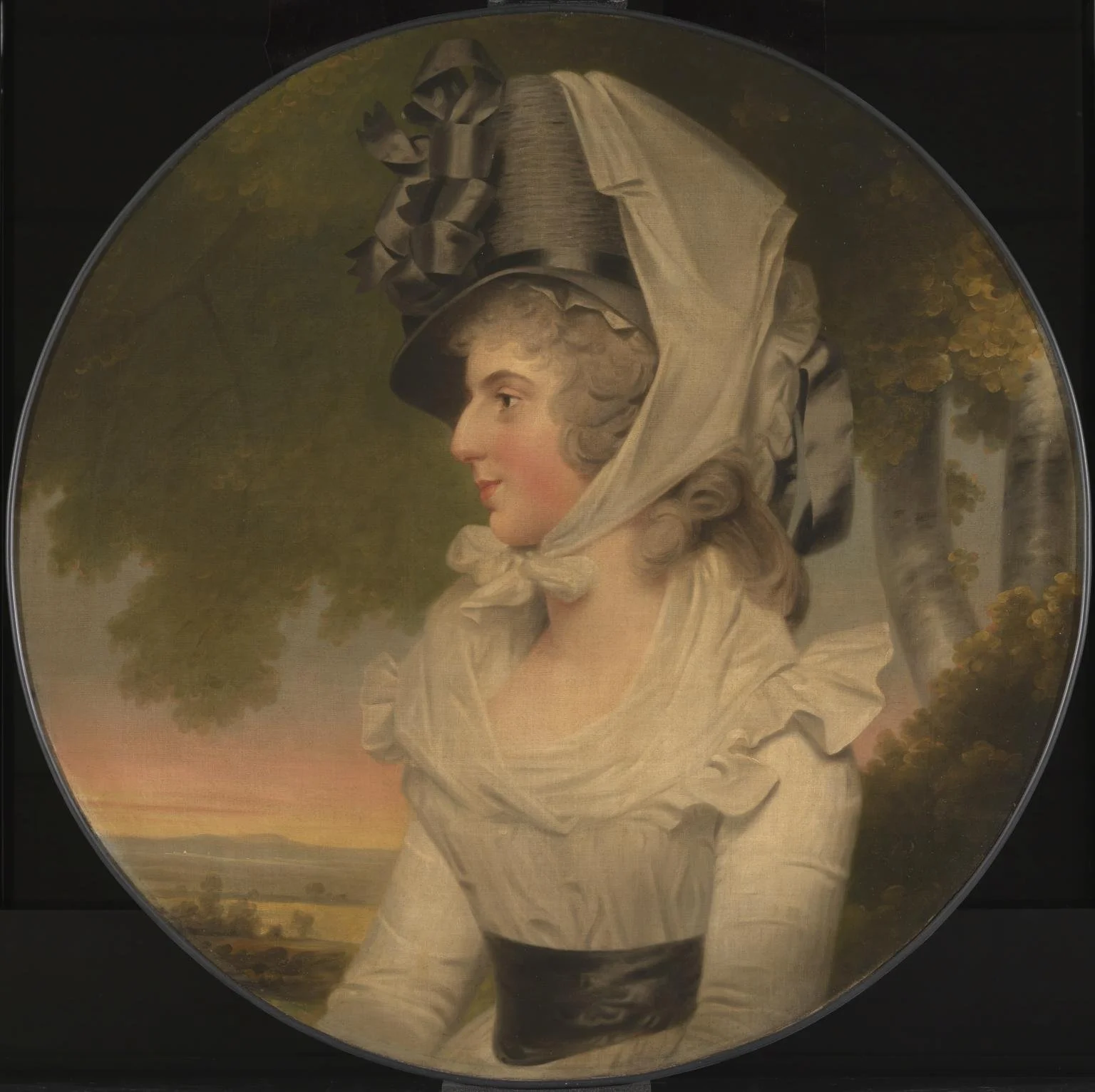
Elizabeth, Margravine of Anspach — English aristocrat, playwright, traveller and Keppel’s mother.
Lady Elizabeth Berkeley was born on December 17, 1750, the daughter of Augustus Berkeley, 4th Earl of Berkeley, and Elizabeth Drax. Beautiful, clever, theatrical and never very obedient, she was married at sixteen to William Craven, 6th Baron Craven, a wealthy husband she had not chosen for herself. The marriage produced seven children, including her youngest and best-loved son, Richard Keppel Craven. It did not produce happiness.
Elizabeth was not merely a scandalous beauty, though scandal followed her almost everywhere. Her marriage broke down amid infidelities on both sides. The couple separated. She was driven from society. With £1,500 a year granted to her, she went away to France, and there, in exile and disgrace, she wrote Letters to Her Son. In this book, she attacked the laws of marriage with startling directness. She argued that women were trapped by obedience, dependence and the legal power of husbands who could neglect, beat, betray or ruin them with little consequence. Long before Mary Wollstonecraft became the name attached to such arguments, Elizabeth Craven had already felt them in her own life and put them on the page.
Still, nothing daunted her. She traveled widely, visiting Italy, Austria, Poland, Russia, Turkey, Greece, Romania and Hungary, writing of what she saw with the eye of a woman who cared as much for the people as the pretty scenery. The resulting book made her famous. Yet she also wrote poetry, stories and plays. She acted in them as well, making performance a way of life for her, and lies second-nature.
This style of living rubbed off on Keppel Craven.
In Germany, Elizabeth met Alexander, Margrave of Brandenburg, Anspach and Bareith. Soon they were lovers. Keppel’s journal strongly suggests that Charles Hesse was the child of this union, raised respectably as the son of a Prussian merchant.
Eventually, the margrave’s wife passed away. So did Elizabeth’s husband. Within two days of learning of Lord Craven’s death in England, Lady Craven wed and became the Margravine of Anspach—a title that legally wasn’t hers. Elizabeth nevertheless used it, and society mostly obliged her out of courtesy. But she was not a dynastic margravine because her marriage was unequal under German princely rules. The only formal title later granted to her was Princess Berkeley, and even that was not recognized by George III in Britain.
Elizabeth and the margrave settled in England. If the court excluded her, actors, musicians, refugees, young men, writers and the rakish came anyway. Elizabeth created a court of her own: theatrical, generous, self-dramatizing, not quite safe. To Keppel, she was not only a mother but an atmosphere. She adored him, indulged him, used him, displayed him, depended on him, and made herself the central fact of his emotional life. She told the world the King of Naples had given her land at Posillipo, but in reality, Keppel had bought it. She let society believe the house at Chiatamone was hers alone, but Keppel had purchased that too. Even her homes were not quite her own; they were her son's devotion, retold as royal favor.
Widowed in 1806, Elizabeth was not left as rich as appearances suggested. Eventually she retired to Naples, where she built her villa at Posillipo, gardened, wrote her memoirs, and remained, to the end, impossible to simplify. She died in Keppel’s house in 1828. She’d been a beauty, a wife, a mistress, a princess, a traveller, a dramatist, a mother and a scandal. But she was also something rarer: a woman who refused, after ruin, to disappear.