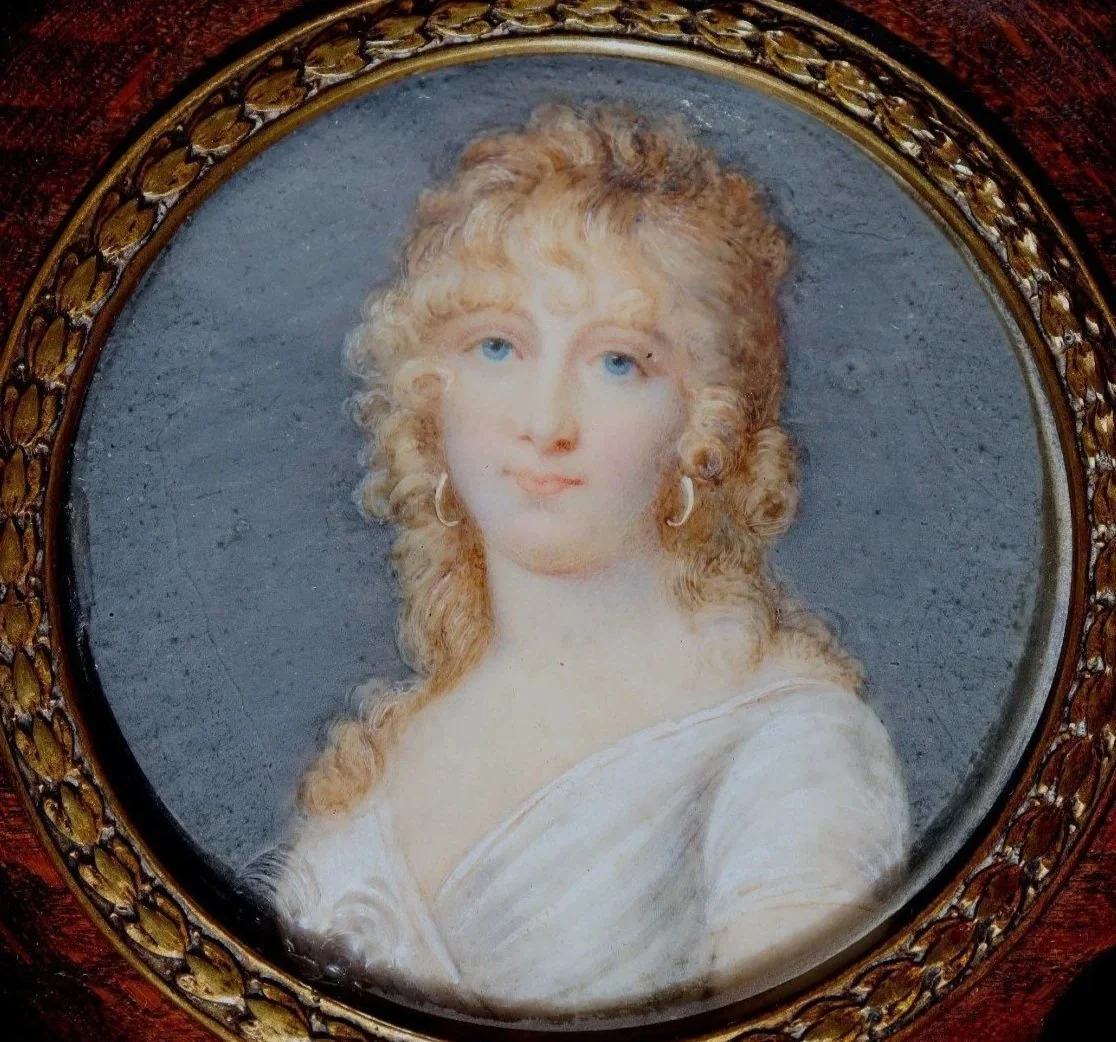
Mary Carter née Wells — author, mother, wife and mistress.
Mary Wells was born in 1765 to a wealthy, land-owning Berkshire parson. One of four sisters, Mary grew up with an overprotective older brother, a well-stocked library, a stable full of horses, a father who indulged her, and an independent streak that showed itself fervently.
She eloped with the illegitimate son of Lord Inchiquin against her father’s wishes in 1793. Thomas Carter was a musician. An Irishman. According to Society, there was no worse choice for a husband, and yet Mary was happy. Her father forgave her. Soon she had two children and a house in Bloomsbury.
Then she met Keppel Craven and it all came undone.
He was fourteen years younger than herself. Higher in rank but looser in morals, Craven nonetheless captivated Mary. Soon her life changed irrevocably. Thomas Carter died, ending a triangle as well as whatever complicated understanding had existed between the two men. The younger nobleman with the shy disposition, good looks and amiability—so smitten with the confidence Mrs. Carter exuded—reappeared in her drawing room. Mary probably seduced him. This sparked a love affair lasting over five decades. She became Craven’s mistress. To capture the heart of the Honourable Keppel Craven was worth her loss of character, surely, but to protect her children’s future, Mary divided her life from then on: to everyone in Berkshire, she had reportedly moved far, far away, her teenagers raised by her family, her face seen only occasionally in Cookham, while to Craven’s social circle, she was the mistress, or the unnamed woman to whom no one was introduced.
In this way, Mary Carter lived with Keppel Craven. She slipped into his world and his morals. She encouraged his male conquests (as evidenced by “Nereid & Gell” in Craven’s 1810 journal); she entertained some of her own lovers for his pleasure and hers, both male and female—Craven wrote “pandarism”—while jealously guarding him from rival ladies. With Sir William Gell, however, she didn’t merely tolerate the bond; she accepted it and seems to have loved Gell too, as she did later with Andrea Pasquini.
From their shared apartment at Albany (where women were not yet forbidden), to Lisbon during the Peninsular War, to the island of Zante, to the Continental tour of the Princess of Wales, to their final home at Naples, Mary stayed with Craven. She stood at the center of his life: as a lover and confidant, as emotional support, as a peace-keeper, nurse and traveling companion, as a mother figure to his only son. Her name appears, disguised, in Craven’s journals. Her end was intricately bound up with his. History remembers him and Gell, and even Pasquini, but it has no place for the woman who held them all together. She was never publicly named.
Yet she was never absent.