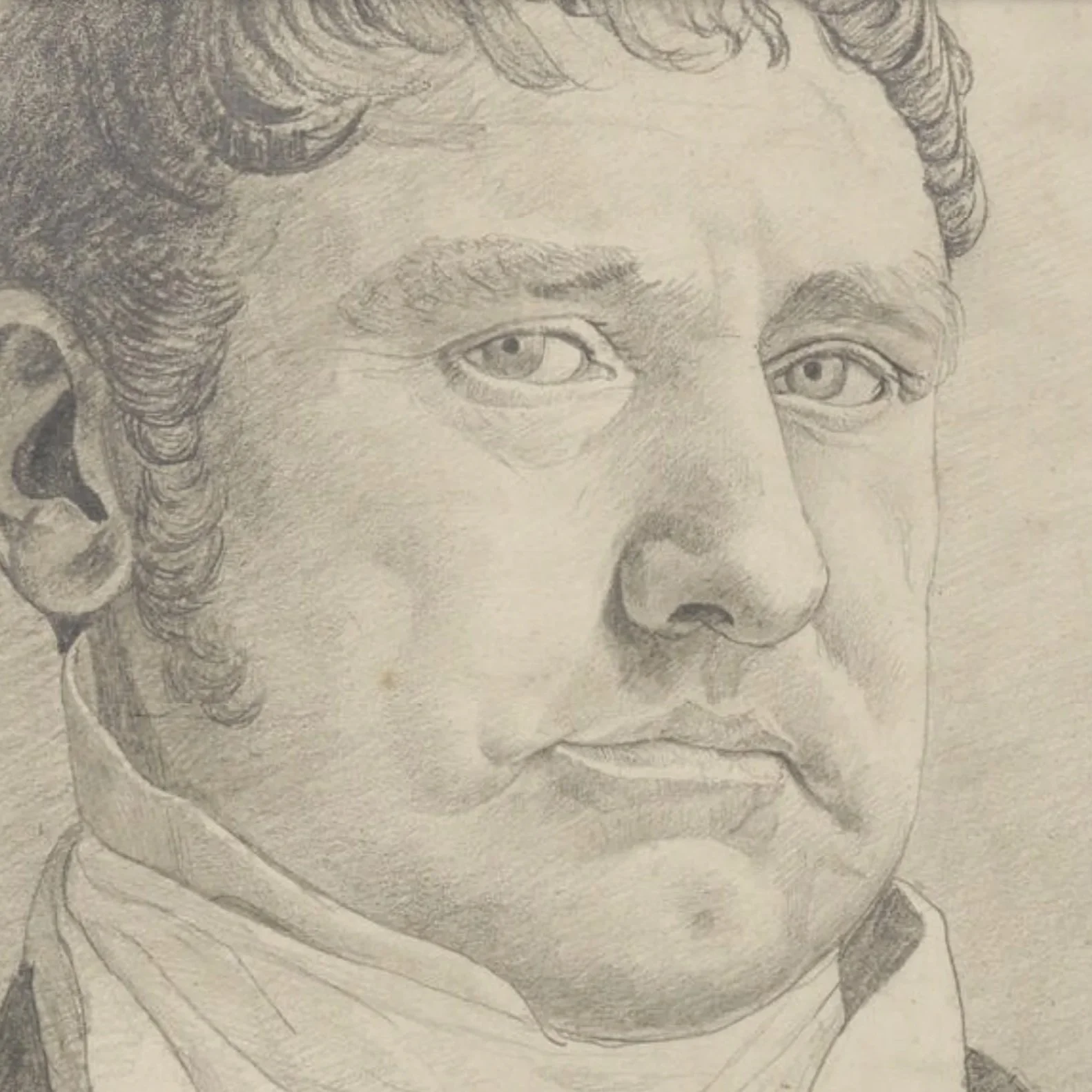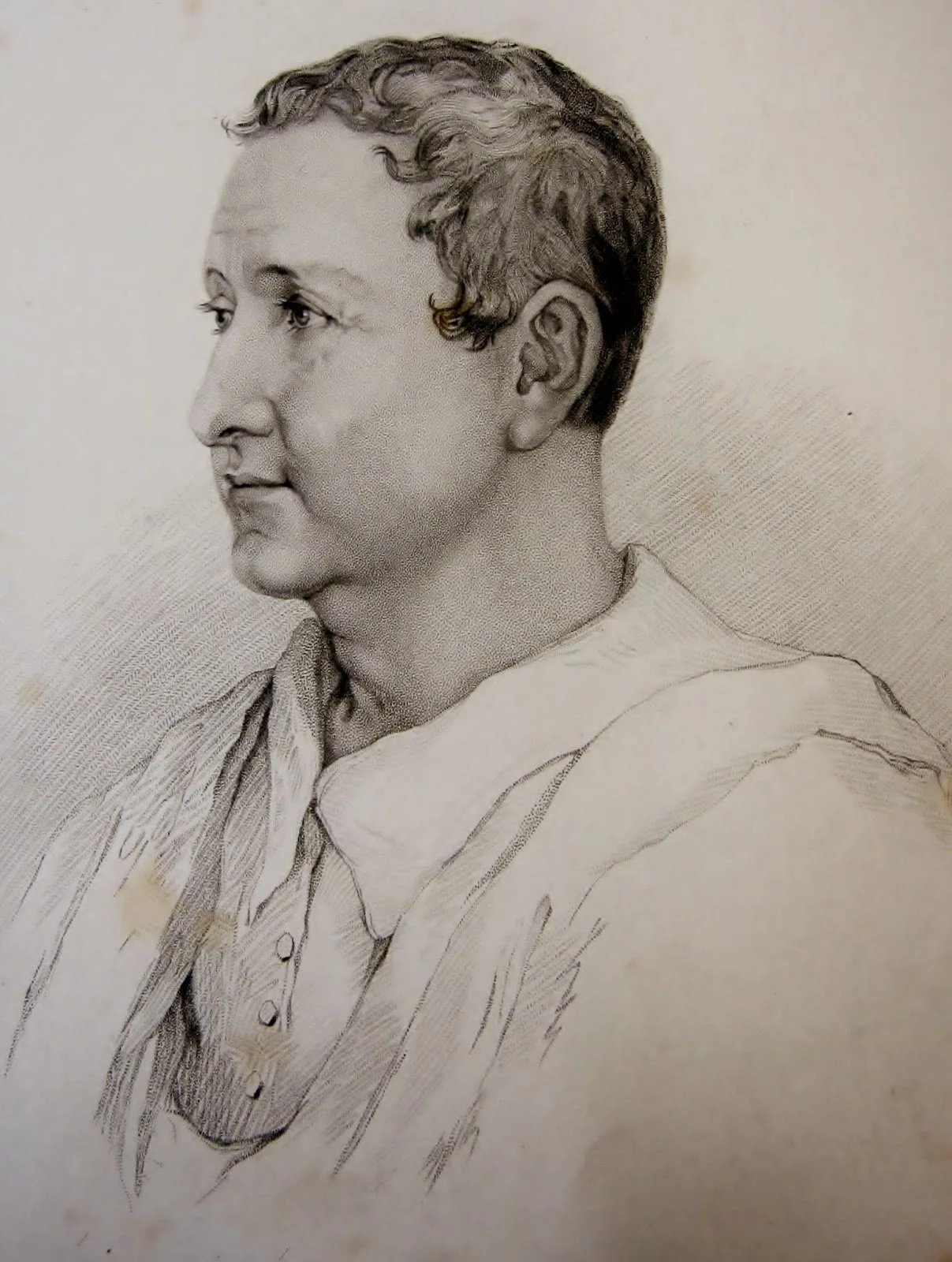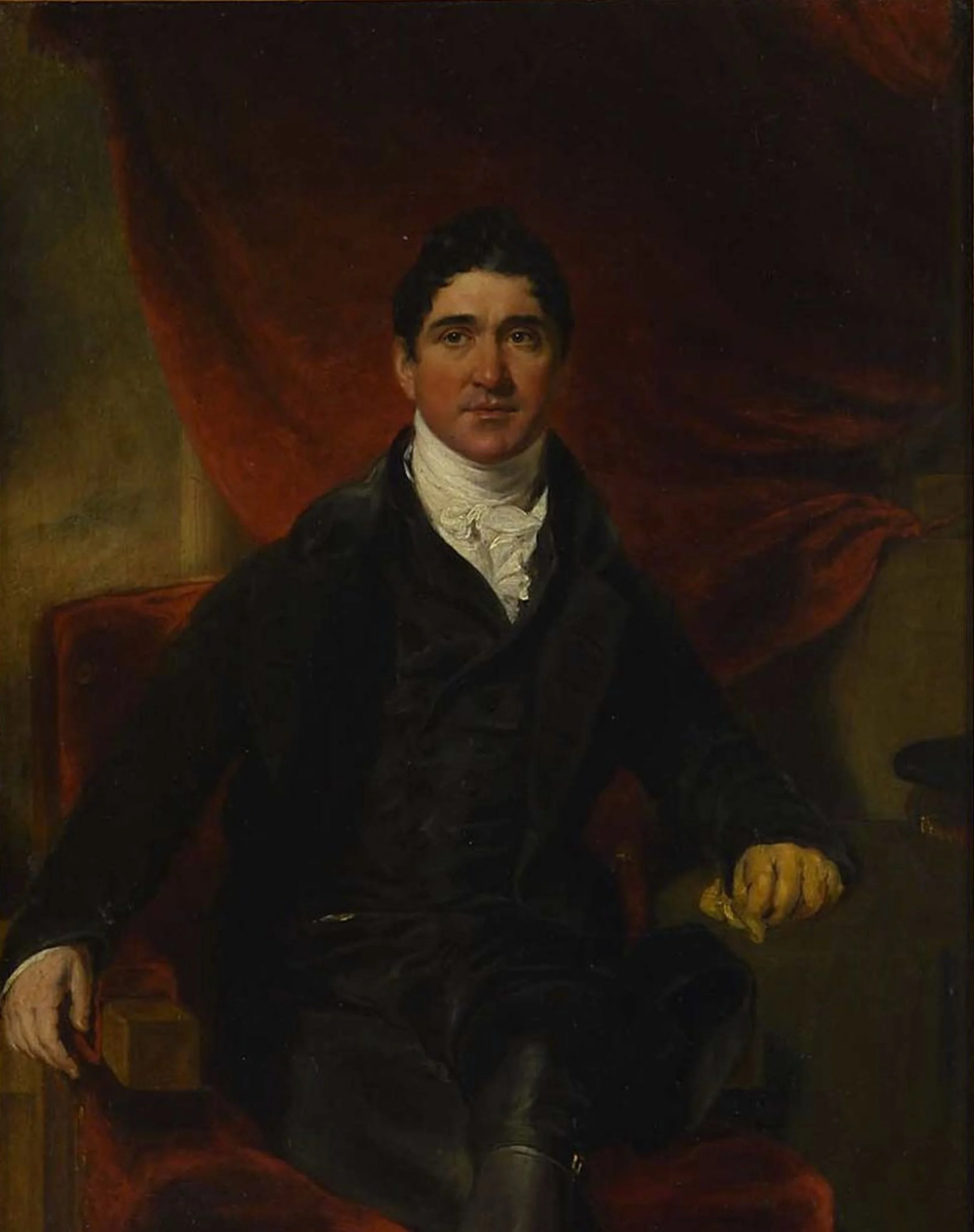
William Gell was born into an ancient Derbyshire family, but as a second son, he had no prospect of wealth. His interest in antiquities, probably encouraged by his topographer stepfather, carried him to Emmanuel College, Cambridge, where he befriended other like-minded scholars and began the career that would make his name. He went on to be elected a Fellow of the Society of Antiquaries.
This passion for history changed his life.
After a tour of Greece, during which he witnessed (and condemned) the removal of the Parthenon frieze, Gell travelled to the Troad and searched for the site of ancient Troy. His survey established him as a serious classicist, and The Topography of Troy was published in 1804. Two further journeys to the eastern Mediterranean followed, including a tour of Turkey under the protection of the British Embassy at Constantinople. Gell hoped for an appointment in the Foreign Office, or a governorship in the Ionian Islands, or at least a fortune from writing about his travels. Instead he gained something less secure but more socially useful: reputation. He was elected to the Society of Dilettanti, and the attention this brought him in London drawing rooms soon afforded him introductions to nearly everyone: to the Princess of Wales, to Jem Belcher the boxer…and to Keppel Craven.
The latter was the love of Gell’s life.
From Kensington Palace to a flea-infested hovel outside Athens, Sir William Gell was comfortable everywhere. He feared very little. He drew beautifully. There was no soul he could not disarm with his particular brand of self-effacing humor. It was true that he had a tendency towards vanity, and jealousy was among his less admirable traits. Yet his encyclopedic knowledge of antiquities impressed; his appetite for learning inspired; his kindness to the less fortunate was legendary; he was really rather handsome, and it was this total picture of courage and farce, of knowledge and warmth and masculine appeal that made him irresistible to the Hon. Keppel Craven.
They were seldom apart after meeting. Wherever Gell went, Craven followed. When Mary Carter entered the mix, Gell didn’t disappear. Instead, he became part of the arrangement. The three became a family in every way. Together, they shepherded the Princess of Wales on her Continental tour, and together, at Naples, they decided to remain.
The life that followed, in which Gell played the reigning classical scholar at Naples (while reigning as king over Keppel Craven’s heart) was filled with Pompeian discoveries, English expat society, more books, maps and publishing as well as far too many dogs. Sir William Gell lived the rest of his days in Italy. He never married. He never had children. To the world, his legacy was his classical scholarship, but to his friends, it was his kindness, or his excellent good humor.
To Craven, it was Gell's character, talent and generous heart—the words Keppel himself chose for Gell's monument. He was, simply, necessary.
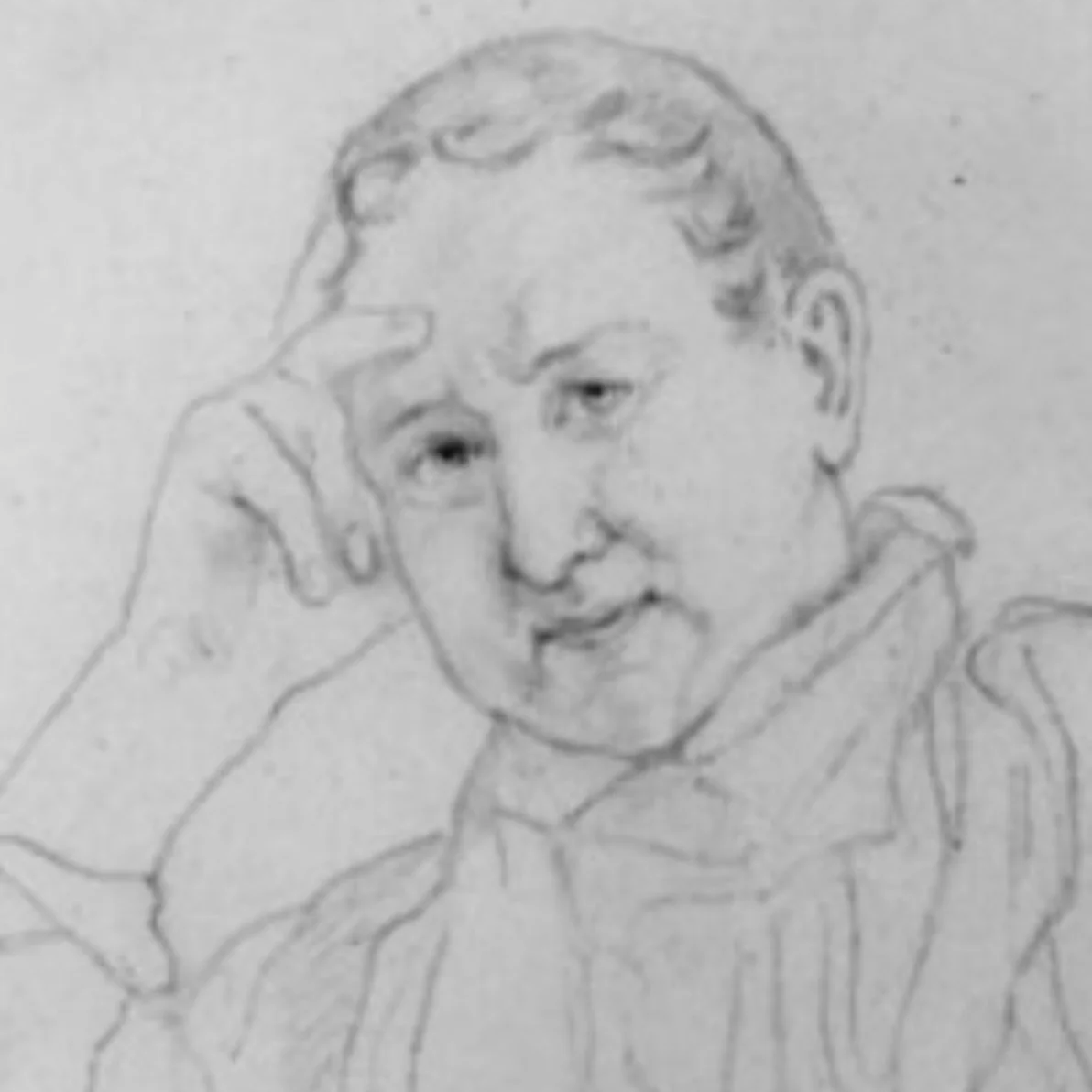
Sir William Gell — English classical archaeologist, topographer, illustrator, author and Keppel Craven’s inseparable companion.
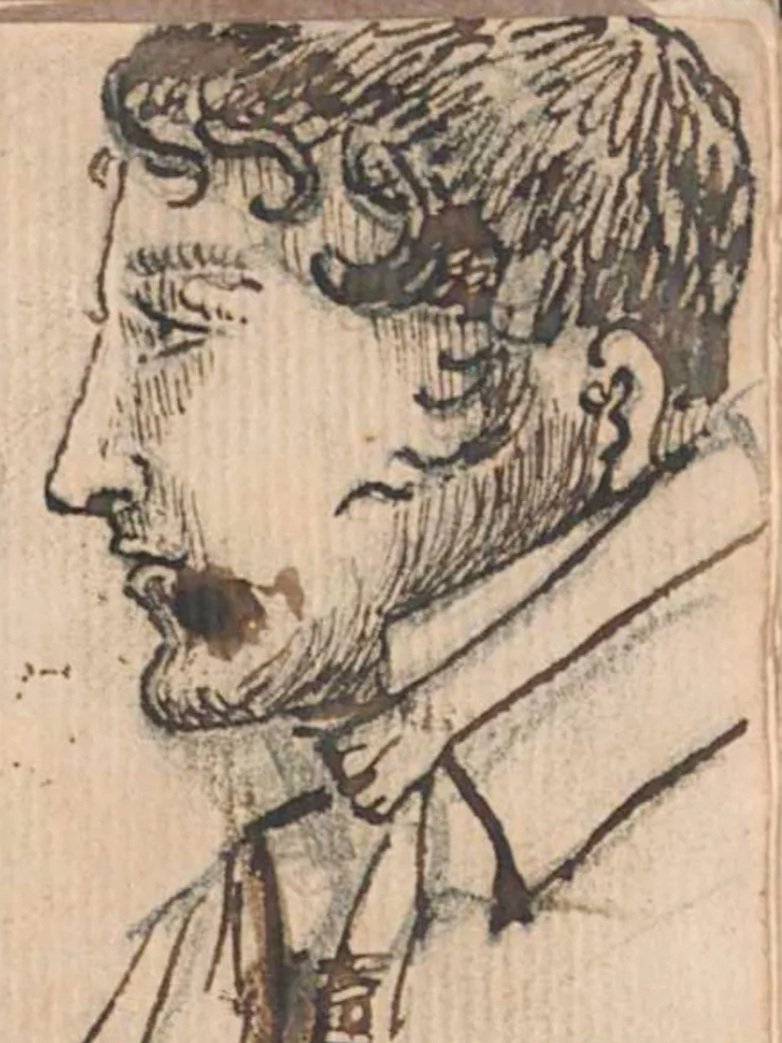
Self-portrait of Sir William Gell. Source: Notebook 4, GELL/4534c, British School at Athens Digital Collections.